Protecting your belongings when moving home: top 10 packing tips
Most breakages in a move come from a handful of avoidable mistakes: weak boxes, loose gaps and items travelling the wrong way up. These ten tips cover how to protect what you own, item by item, whoever does the lifting.
How damage happens in a move
Damage in a move is rarely dramatic. It is a plate chipped because two sat edge to edge, a lamp base cracked under a heavy box, a mirror scratched by a strap. The causes are movement, weight and pressure.
Movement happens when a box has space inside, so items slide and knock. Weight comes from heavy things packed on top of light ones. Pressure is stacking, when something on the bottom of a pile has to carry everything above it.
Every tip below addresses one of these three. If you pack so that nothing can move, nothing heavy sits on something fragile, and the load is stable, you have dealt with most of the risk.
This post is about protection. If you want the order to pack in and how to organise the weeks beforehand, packing tips when moving house sets out a timeline, and the full house packing page explains how the packing option works in a Full Removals quote.
Tips 1 and 2: Use the right materials, and the right boxes
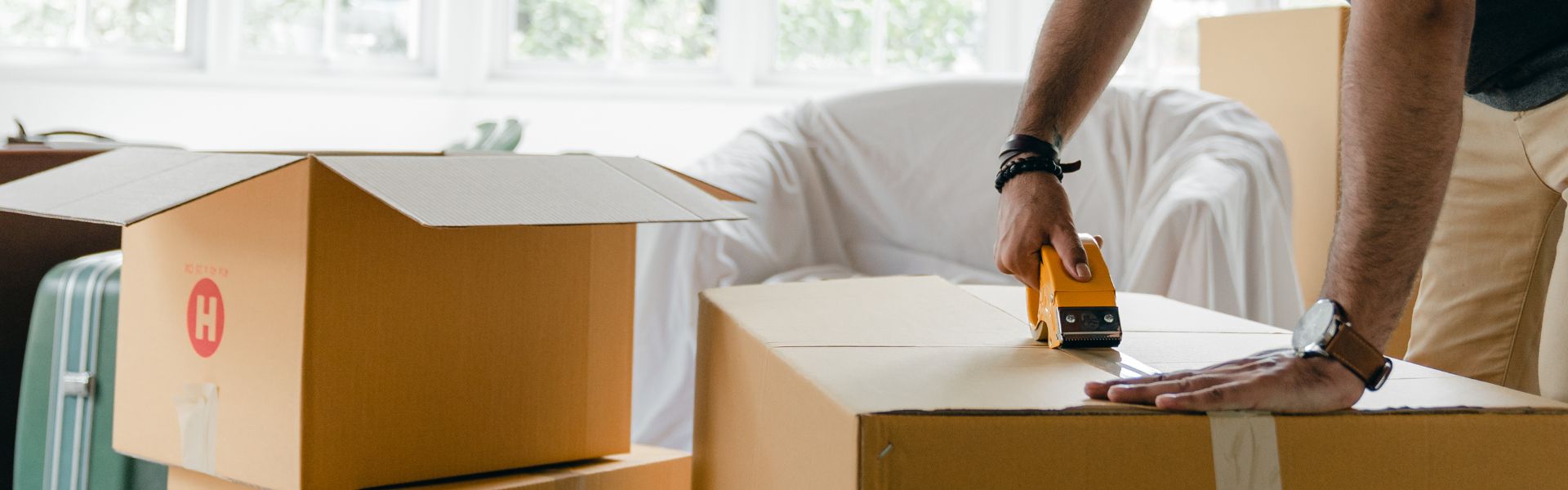
Tip 1: Do not skimp on materials. Reused boxes from supermarkets are fine for books and tinned food but often too weak for crockery. Use strong boxes with intact flaps and bottoms, and tape the base with several strips in an H pattern.
Good materials are inexpensive compared with the cost of replacing breakages: packing paper, bubble wrap, parcel tape, markers, labels and a few blankets. Plain paper is better than newspaper for anything that could be marked by ink.
Tip 2: Match the box to the contents. Small boxes for heavy things, large boxes for light things. A box of books the size of a wardrobe is too heavy to lift, and a small box of pillows is a waste of space.
A good test is to lift it. If you struggle, take something out. Heavy boxes are the main cause of back injuries and dropped cartons.
Tips 3 and 4: Wrap fragile items, and fill every gap
Tip 3: Wrap each fragile item individually. Plates go in paper one at a time, then stack on their edges, like records, rather than flat. Edge-on is much stronger than flat because the load travels along the plate.
Glasses need paper stuffed inside and around them. Cups can be nested after wrapping. Put a layer of crumpled paper or bubble wrap at the base of the box, and keep heavy items at the bottom, lighter ones above.
Tip 4: Fill the gaps. A box with space inside is a box where things move. Fill empty areas with crumpled paper, towels or clothes, and press down on the top. If the contents rattle when you shake it gently, add more.
Close the box so the flaps meet and the top is slightly firm, not bulging. A flap that does not close means the box will not stack safely.
The kitchen is where these rules matter most, because glassware and crockery are the most common breakages, and it is the room many people want help with when they ask for the packing option.
Tips 5 and 6: Protect screens, mirrors and pictures
Tip 5: Treat TVs and electronics with care. Use the original box if you still have it. If not, wrap the screen in a soft blanket, and put the TV upright in a strong box, never flat. Photograph the back of the setup before you unplug it, so you can reconnect everything later.
Pack cables in labelled bags taped to the device. Remote controls and small parts go in a clearly marked box that you carry yourself.
Tip 6: Keep mirrors, pictures and glass upright. Flat glass is fragile under any pressure. Tape a cross over a mirror or picture to hold the pieces together if it breaks, wrap it in blankets or a specialist mirror box, and travel it on its edge, standing upright, padded and secured.
Never lay a glass tabletop flat in the van with other items on top. Ask for it to be loaded last and upright against the side, strapped and padded.
Tips 7 and 8: Protect furniture, and look after mattresses and clothes
Tip 7: Cover furniture and its corners. Wrap sofas and armchairs in covers or old sheets, to keep them clean and protect upholstery. Corner protectors on tables, cabinets and bed frames stop the dents that cause most furniture damage.
Take off legs where you can, put screws in labelled bags taped to the piece, and remove drawers or tape them shut. Empty any drawers with heavy contents before the item is lifted.
Tip 8: Bag mattresses and use wardrobe boxes sensibly. A mattress cover keeps a mattress clean and dry, and a mattress should travel flat or upright, not folded. Clothes can stay on hangers inside a wardrobe box, which saves time and avoids creasing.
If you do not have wardrobe boxes, large bags and a few strong bin liners can work for short journeys. Do not pack shoes in with clothes, or heavy items on top of knitwear.
Tips 9 and 10: Label everything, and load for stability
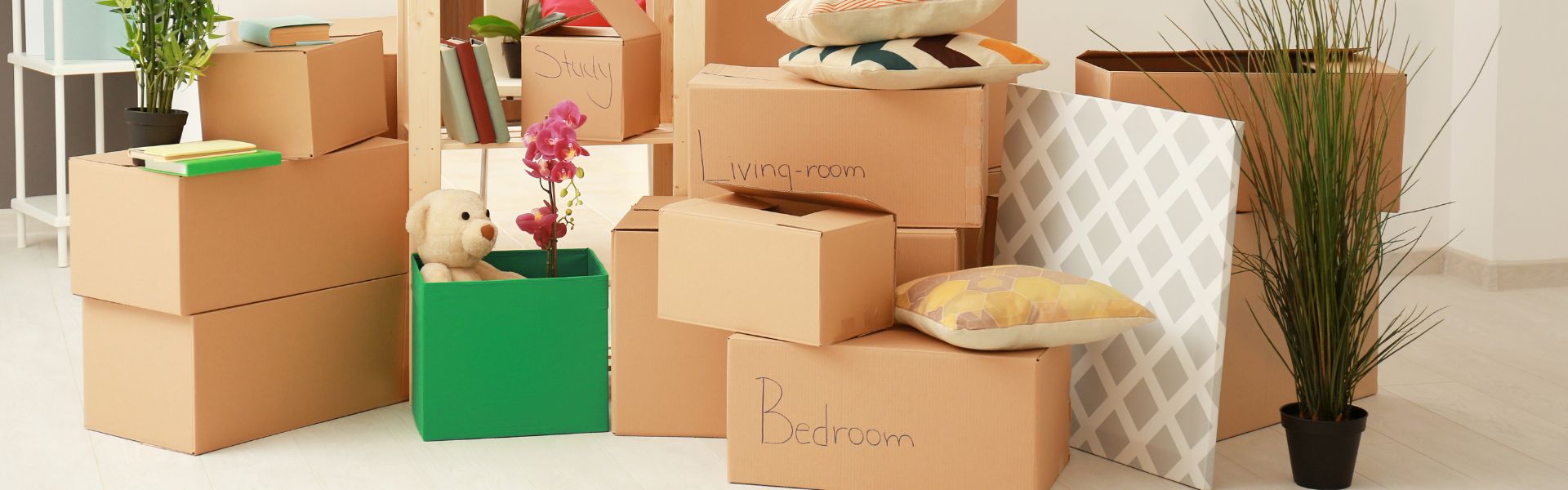
Tip 9: Label by room and by contents. A label that says "Kitchen, glasses, fragile" on the top and two sides tells whoever carries it how to treat it and where to put it. A system of colours for rooms speeds up unloading.
Number your boxes and keep a short list of what is in each one. If something goes missing, you will know which box to check, and if a box is damaged you will know what to claim for.
Tip 10: Load heavy first and low, light last and high. Whoever loads the van will do this, but it helps to understand the logic. Heavy items go against the bulkhead, boxes of equal size stack in tight layers, and fragile things go in last and on top, strapped.
If you are using a man and van, tell the driver which boxes are fragile before loading starts. If you are asking for a Full Removals quote, a video walkthrough gives the quote team a clear sense of what needs extra protection.
Awkward items that need their own plan
A few things refuse to fit the usual advice. Liquids are the first. Cleaning products, oils and open bottles leak, so seal lids with tape, stand them upright in a plastic crate or tray, and keep them away from food and paper. Aerosols and anything flammable should not travel in a hot van, so use up what you can.
Tools and garden equipment come next. Sharp blades go in a sleeve or wrapped in cardboard, power tools in a strong box with the cables coiled, and a lawnmower needs its fuel emptied. A damp tool leaves rust marks on whatever it touches.
Artwork and framed photographs need flat, rigid protection. Sandwich a frame between two sheets of cardboard, wrap it, and keep it upright with other flat items. Do not stack anything heavy on a frame, even a wrapped one.
Ornaments and collections are best wrapped one by one, and the box should say what is in it. For sentimental pieces, a short note in your own handwriting on the box lid is worth the effort, because it stops a well-meaning helper stacking it under a stack of books.
If any of these items are valuable, put a photograph of each in your records before you pack. A quick set of pictures on your device is useful for your own memory and for any cover claim.
What to carry yourself
Some items should travel with you, not in the van. Documents, passports, keys, medication, jewellery, chargers and anything irreplaceable stay in a bag you keep close.
A first-night box is a good addition: kettle, mugs, tea, toilet roll, bedding, a change of clothes, basic tools and device chargers. Put it in the car or load it last so it comes out first.
Laptops, backup drives and mobiles are worth keeping with you, and it is wise to back up your data before moving day.
Plants are fragile in other ways. They do not like being closed in boxes for long, so water them a few days beforehand, and ask whoever is driving whether they can take them in the cab.
Protection is not the same as cover
Careful packing reduces the chance of damage. It does not remove it. If something is damaged in a van, the question of who pays depends on the cover the driver or crew holds and on how items were packed.
Ask any mover which goods-in-transit insurance cover they hold, what the limit is and what is excluded. Items you pack yourself are sometimes treated differently from items packed by the mover. Your own home contents policy may help, so check it.
Mention valuable or fragile items when you ask for a price, whether through a man and van booking or a Full Removals request. If an item is worth more than you could replace comfortably, say so at the start and ask what cover applies.
If packing is something you would rather have arranged, the optional packing service and boxes in a Full Removals request are there for exactly this. The price section on this page is the place to start.
This guide is part of full house packing in Bournemouth.